Skip to content
Barkhausen AI

The measurement of AI visibility

An AI assistant names some and omits the rest. What decides that is measurable.

Most of what is claimed about visibility in AI answers is asserted, screenshotted, or sold. Here it is measured — with defensible statistics, open data, and sources that can be checked.

MIT Museum · Public domain

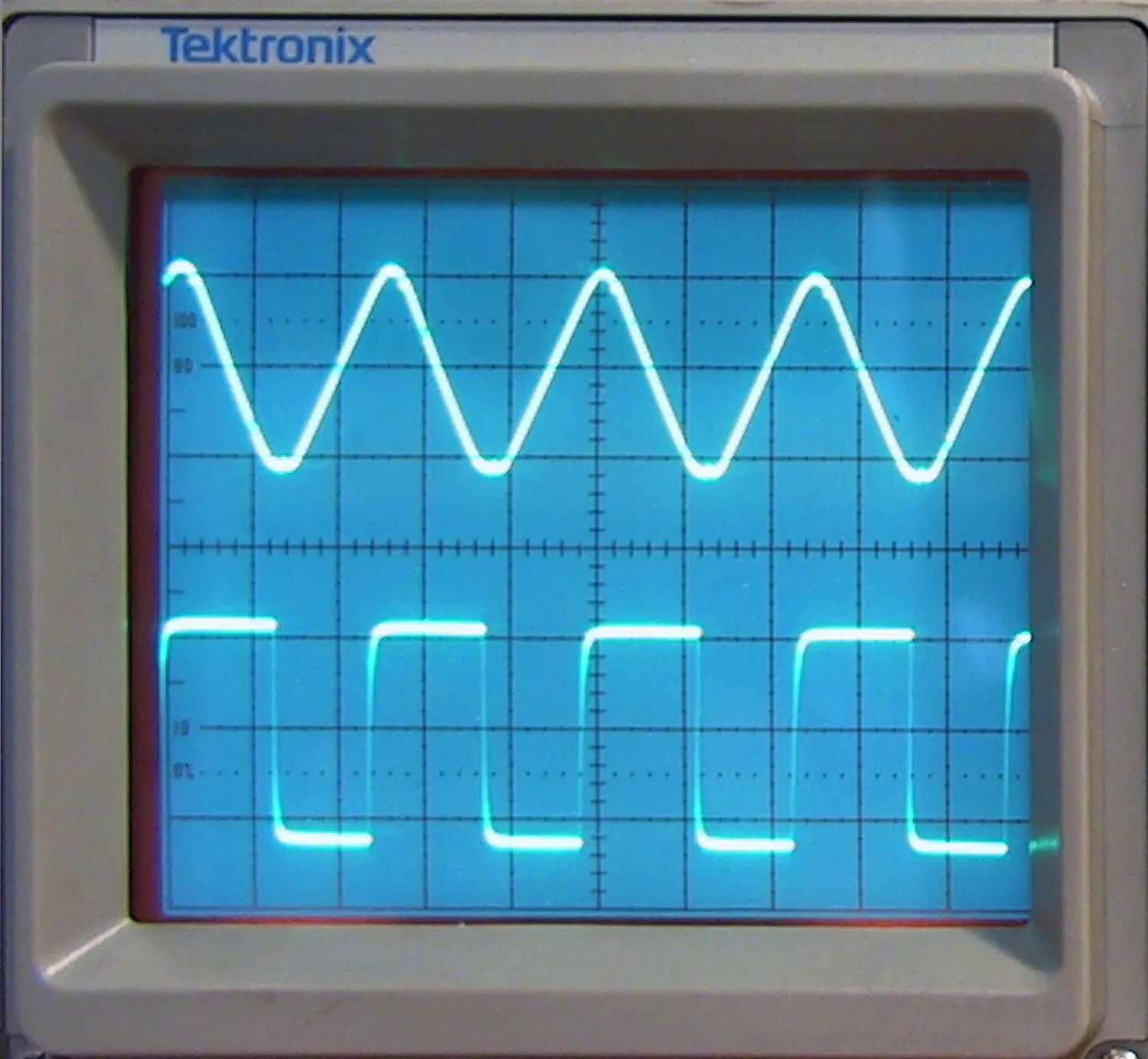
A triangular wave and a square wave on an oscilloscope screen — a periodic signal read off an instrument.Xato · CC0

WhitepaperBA-W-2026-012026

Measuring AI visibility: statistical requirements and common failures

A brand's visibility in AI assistants is routinely 'verified' with a single screenshot or one daily query. This paper argues such verification is not measurement. Answer engines are stochastic and their retrieval changes continuously: lightly rewording a query while holding its intent fixed cut the overlap of the brands an assistant recommended to a Jaccard similarity near 0.3 — far below the 0.50–0.61 overlap of a plain re-run — and an identical prompt re-issued a day later overlapped only 34–42% in cited sources and 45–59% in mentioned brands. A single observation of a moving distribution estimates nothing. The paper enumerates what voids a visibility claim — no sample size, no interval, no window, no engine version, one fixed phrasing, uncontrolled personalization, discarded refusals — and shows a three-sigma jump can be pure drift. It then states what valid measurement requires — repeated sampling to a declared precision, bounded intervals near the extremes, a phrasing distribution, partial pooling, explicit windows and versions, change-point monitoring, recorded refusals — specified in BA-C-2 and BA-C-3.

Read the paper →

Conventions

All →
How these conventions are developed →

Reference

All →
  • AI crawler registry

    The AI-related crawlers by operator and function — training, retrieval, user-triggered fetch, agent, and search — with their robots.txt tokens and official documentation.

  • Engine documentation index

    An annotated directory of the official documentation for AI answer engines and their crawlers.

  • Glossary

    Canonical definitions of the field's terms, drawn from the published conventions.

  • Engine profiles

    Per-engine reference profiles — the crawlers each operator publishes, and what its documentation states about retrieving web content and grounding answers in sources.

  • Annotated bibliography

    The field's primary literature — measurement studies, statistical foundations, corpus and crawling research, adoption evidence, and the reporting-guideline tradition — each with a short appraisal and its source.